Comparison
Padel vs pickleball: what's the difference?
Padel vs pickleball compared: padel uses glass walls and a tennis-style court; pickleball is wall-free on a smaller court.
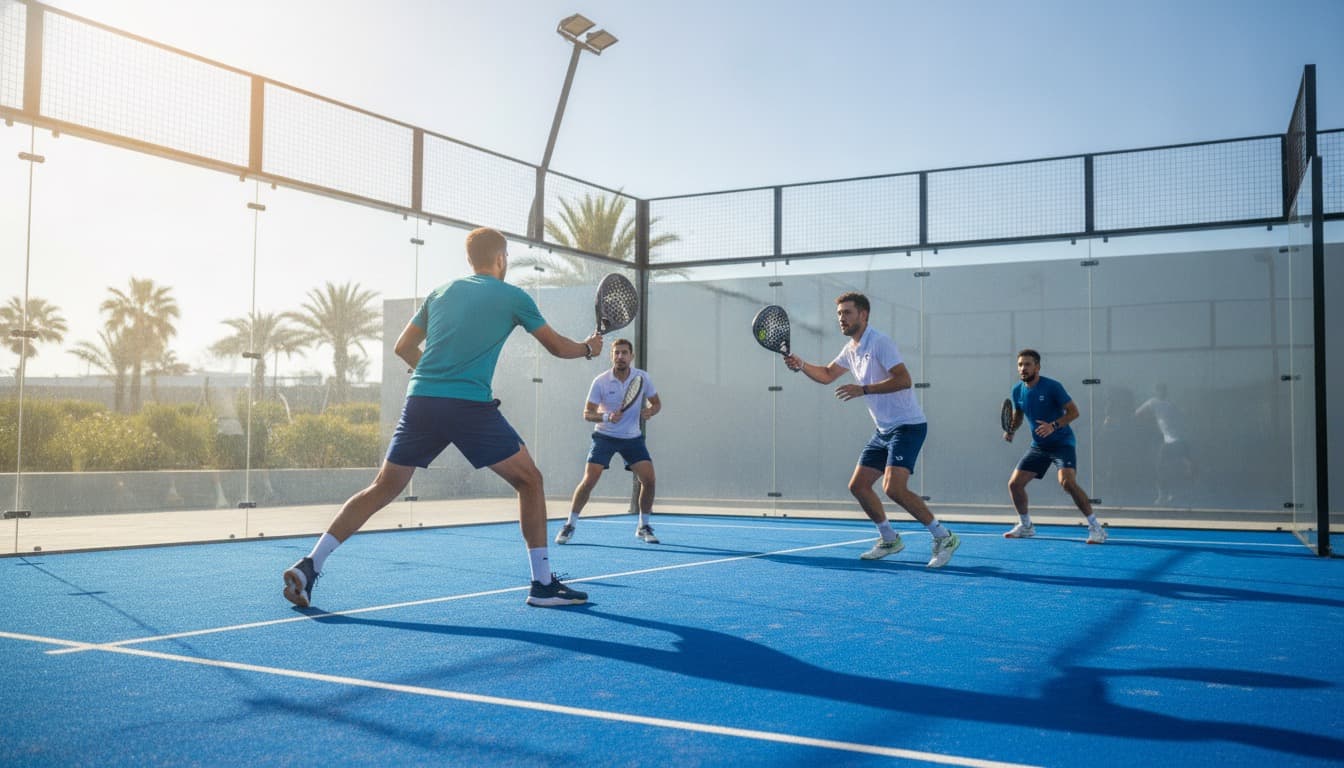
If you like pickleball, padel is the closest racket sport you have not tried. The short version: padel is played on an enclosed glass-walled court where the walls stay in play, while pickleball is played on a smaller open court with no walls. Both are doubles-friendly and easy to start, but the rallies feel nothing alike.
The quick comparison
Here are the two sports side by side, accurate to the standard rules of each.
| Feature | Padel | Pickleball |
|---|---|---|
| Court size | 20m x 10m (about 66 x 33 ft) | 13.4m x 6.1m (44 x 20 ft) |
| Walls | Yes — glass and mesh, in play off the rebound | No walls |
| Equipment / paddle | Solid, stringless perforated racket | Solid flat paddle |
| Ball | Pressurised, like a tennis ball but slightly softer | Perforated plastic ball with holes |
| Net height | 0.88m at center (0.92m at posts) | 0.86m at center (0.91m at sidelines) |
| Scoring | Tennis scoring: 15, 30, 40, games and sets | Rally or side-out to 11, win by 2 |
| Players | Almost always doubles (2v2) | Singles or doubles, usually doubles |
| Where it's big | Spain, Argentina, Italy, Europe, Middle East | United States, Canada |
What padel actually is
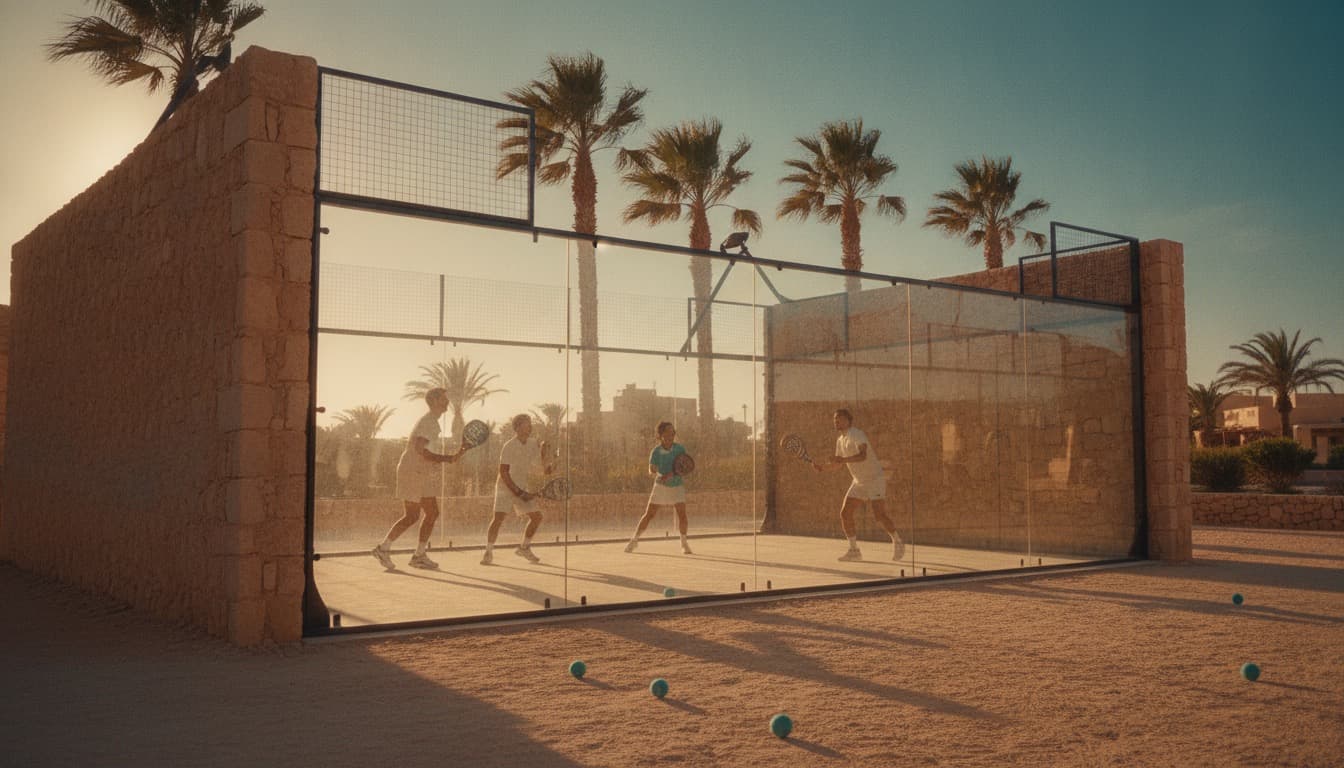
Padel was invented in 1969 by Enrique Corcuera in Acapulco, Mexico, who walled in a small court at his home. The walls are the whole point: the ball can bounce on the floor and then off the glass, and you can play it off the rebound, much like squash. That single difference turns a short tennis point into a long, patient chess match.
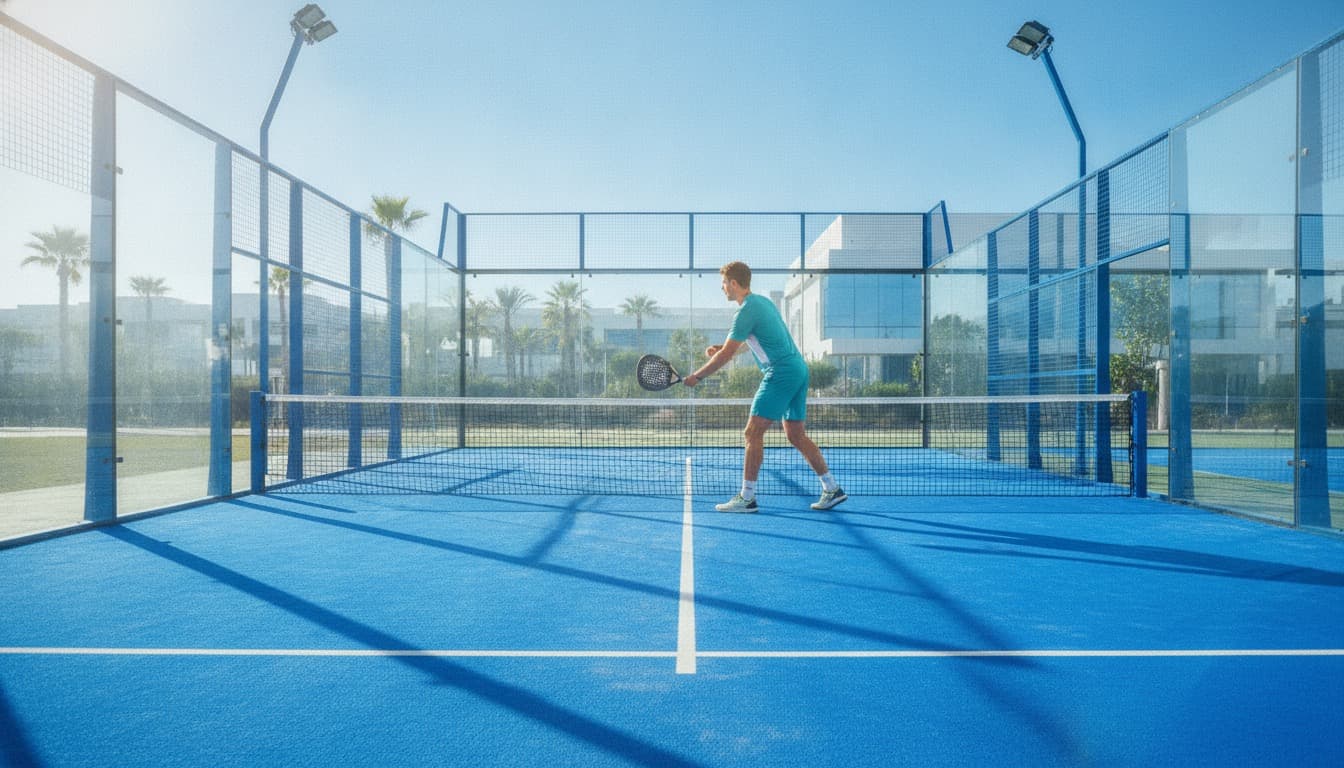
The court is 20m by 10m, enclosed by glass and metal mesh, with a net across the middle. You serve underhand, the ball must bounce before it hits a wall, and scoring works exactly like tennis — 15, 30, 40, games and sets. Almost everyone plays doubles, which is why finding the right partner and opponents matters so much.
What pickleball actually is
Pickleball was created in 1965 near Seattle by Joel Pritchard, Bill Bell and Barney McCallum, blending tennis, badminton and table tennis. You play on a small flat court the size of a badminton court, with no walls, hitting a perforated plastic ball with a solid paddle.
Two rules give pickleball its character: the "kitchen" — a no-volley zone seven feet from the net — and the double-bounce rule, where the ball must bounce once on each side before anyone can volley. Games are usually played to 11, win by 2. It is famously quick to pick up, which is exactly why it spread so fast across the US.
How the two sports feel different
If you come from pickleball, three things will surprise you in padel:
- The walls reset the point. A ball that looks dead off the back glass comes back into play. Points last longer and reward positioning over power.
- The ball moves faster. A pressurised padel ball off a smash travels quicker than a plastic pickleball, so reactions and lobs matter more.
- The court is bigger and you cover more ground. Padel asks for more movement, but the underhand serve and walls keep rallies forgiving for beginners.
What carries over nicely: both are doubles games at heart, both punish ego and reward smart, consistent play, and in both the gap between two mismatched players ruins the match. A balanced game is everything.
Which should you try?
If you want the fastest possible first game, pickleball wins. If you want longer, more tactical rallies and you like the idea of playing the walls, padel is worth the slightly steeper start. Many players happily do both — the hand-eye and court sense transfer.
The honest catch with padel is the same as with any 2v2 sport: a good session depends on even teams. Turn up to a court with three strangers of wildly different levels and the match falls flat.
That is the problem PadiQ solves. We rate your padel level on a clear 0–7 scale, then build balanced 2-v-2 matches with players near you. If you are coming over from pickleball, get your padel level first so your early matches feel fair, then find courts near you and play.
To go deeper, read padel levels explained to see where you would start, or how to find padel partners if you do not have a regular four yet.
Ready to play padel?
Pickleball got you hooked on racket sports — padel is the natural next step. Take the free level test and we will place you on the 0–7 scale, then match you with players at your level near you. Better matches, better games.
Frequently asked
- Is padel the same as pickleball?
- No. Padel is played on an enclosed 20x10m court with glass walls you can play off, using a solid stringless racket and a tennis-style ball. Pickleball uses a smaller wall-free court, a perforated plastic ball, and a flat paddle. Different games.
- Is pickleball the same as padel?
- No, though both are racket-and-net doubles sports. Pickleball borrows from tennis, badminton and table tennis on a hard 13.4x6.1m court. Padel is closer to tennis with walls in play, a faster ball, and a glass-enclosed court. The rallies feel completely different.
- Is padel harder than pickleball?
- Padel has a steeper start because you must learn to use the walls and read rebounds, but both are far easier to begin than tennis. Pickleball is the quicker first game; padel rewards longer, more tactical rallies once the walls click.
- Which is more popular, padel or pickleball?
- It depends on where you are. Pickleball is the bigger sport in the United States and Canada. Padel dominates in Spain, Argentina, Italy and much of Europe and the Middle East, and is now growing fast in the US.
Play balanced padel
Find players at your exact level
PadiQ rates your padel level and builds balanced 2-v-2 matches near you. Get your level in a few minutes.
Get your level