Guide
The history of padel: who invented it and where
Who invented padel, when, and where: the full origin story from Acapulco 1969 to today's global boom.
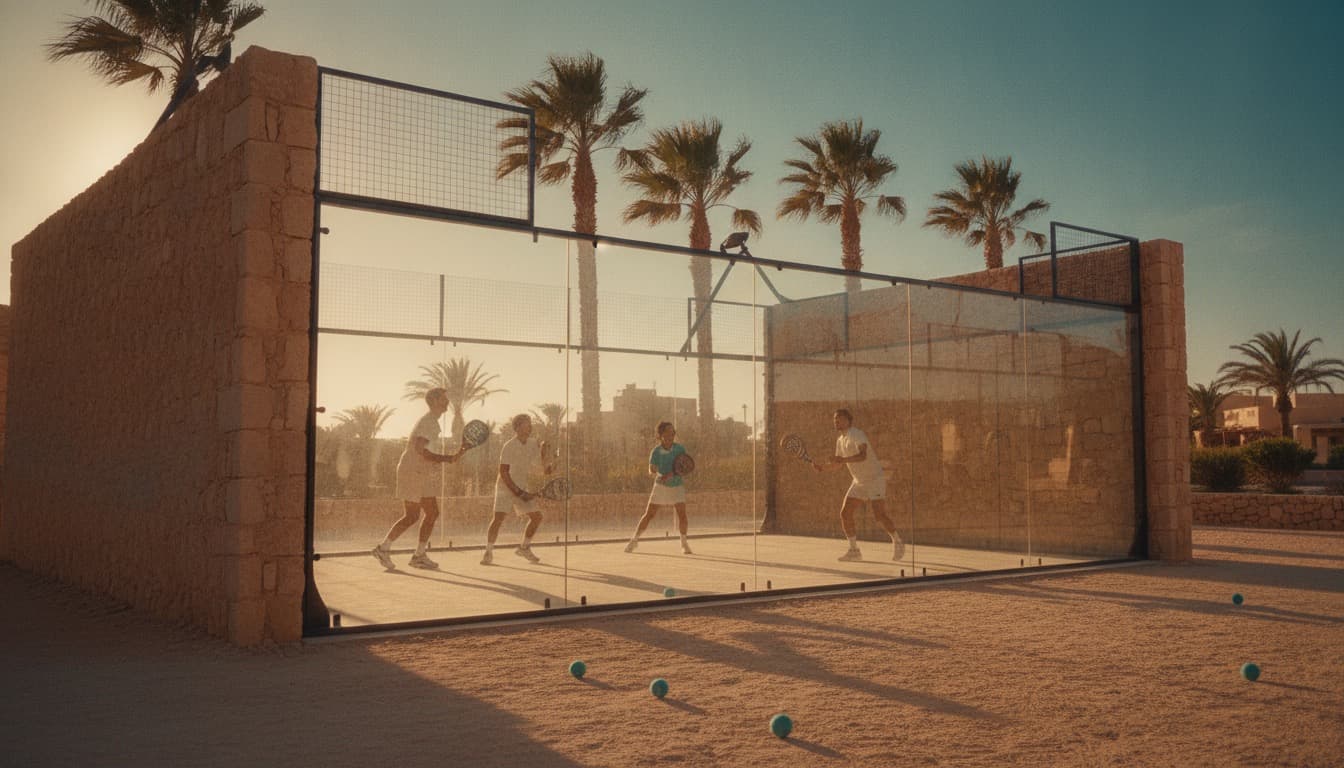
Padel was invented by Enrique Corcuera in Acapulco, Mexico, in 1969. He enclosed a small court at his home with walls so the ball could be played off the glass and mesh, creating the doubles game on a 20-by-10-metre court that is now played worldwide.
Who invented padel
Enrique Corcuera was a Mexican businessman, not a sports inventor. The story is domestic, not commercial: he wanted a court at his Acapulco home but had limited space, so he walled the area in to stop the ball escaping. Rather than fight the walls, he made them part of the game — the ball could rebound off them and stay in play.
That single decision is what separates padel from tennis. The enclosure turned a constraint into the sport's defining rule. Corcuera kept the smaller racket, the underarm serve, and a tennis-style scoring system, but the walls changed everything about how points are built.
Where padel originated and how it spread
Padel originated in Mexico, but it grew up in Spain and Argentina. The chain of people who carried it matters as much as the dates.
| Year / Era | Place | What happened |
|---|---|---|
| 1969 | Acapulco, Mexico | Enrique Corcuera builds the first enclosed court at his home |
| Early 1970s | Marbella, Spain | Alfonso de Hohenlohe sees the game in Mexico and builds courts in Spain |
| 1970s | Argentina | Padel arrives via Spanish connections and spreads quickly |
| 1990s | Spain & Argentina | First professional circuit; padel becomes a mainstream sport |
| 2010s–2020s | Worldwide | Global boom across Europe, the Middle East, and beyond |
Alfonso de Hohenlohe, a Spanish aristocrat and friend of Corcuera, saw the game in Acapulco and built the first European courts in Marbella in the early 1970s. From there it caught on across the Spanish coast. Around the same time, padel reached Argentina, where it exploded into a genuine mass sport — for decades Argentina and Spain held more courts and players than anywhere else on earth.
When padel became professional
Through the 1980s padel was a regional passion confined mostly to Spain and Argentina. The 1990s brought structure: federations, ranking systems, and a professional circuit that gave the sport visible stars and a competitive calendar. This is the period that turned a club pastime into a career path, and it cemented the rules most players still recognise today.
The modern boom
The real explosion came in the 2010s and 2020s. Padel spread across Europe, the Middle East, Scandinavia, and the UK, with new courts appearing faster than coaching and community could keep up. The reasons are simple:
- It is easy to start. The enclosed court keeps rallies alive, so beginners feel competent in their first session rather than chasing balls.
- It is social by design. Padel is played as doubles on a smaller court, so four people are always close together and talking.
- It scales fast. A padel court fits in roughly a third of the footprint of a tennis court, so clubs can add several where one tennis court stood.
That growth created its own problem. With so many newcomers, the hard part is no longer finding a court — it is finding three other players at a level that makes the match worth playing. A beginner and an advanced player on the same court is a bad evening for both. If you are new to the sport entirely, start with what padel is and how the level scale works, then sort out who you actually play with.
Why the origin still shapes the game
Everything distinctive about modern padel traces back to that walled-in Acapulco court: the glass rebounds, the doubles-only format, the underarm serve, the premium on positioning over power. Corcuera did not set out to start a global sport — he just wanted to play in a small space. The constraint he engineered around is exactly what made the game spread.
The history explains the appeal. The thing the history does not solve is the matchmaking. That is the gap PadiQ fills: get your padel level on the 0–7 scale in about six minutes, then find courts and players near you who actually match it — so the game Corcuera invented feels as good for you as it did at his home in 1969.
Frequently asked
- Who invented padel?
- Padel was invented by Enrique Corcuera, a Mexican businessman, in 1969. He built the first court at his home in Acapulco, Mexico, walling in a small space so the ball could be played off the back and side walls. The enclosed, doubles-only format he created is the game we play today.
- When was padel invented?
- Padel was invented in 1969, when Enrique Corcuera built his first enclosed court in Acapulco. It spread to Spain and Argentina through the 1970s, professionalised in the 1990s, and entered its global boom in the 2010s and 2020s, becoming one of the world's fastest-growing racket sports.
- Where was padel invented?
- Padel was invented in Acapulco, Mexico, at the home of Enrique Corcuera in 1969. From Mexico it reached Marbella, Spain, via Alfonso de Hohenlohe, and then Argentina, where it grew into a mass sport. Spain and Argentina became the two heartlands of the modern game.
Play balanced padel
Find players at your exact level
PadiQ rates your padel level and builds balanced 2-v-2 matches near you. Get your level in a few minutes.
Get your level