Beginner
How to play padel: rules and a beginner's guide
How to play padel: the rules, scoring, serve and wall play, explained plainly for beginners getting started.
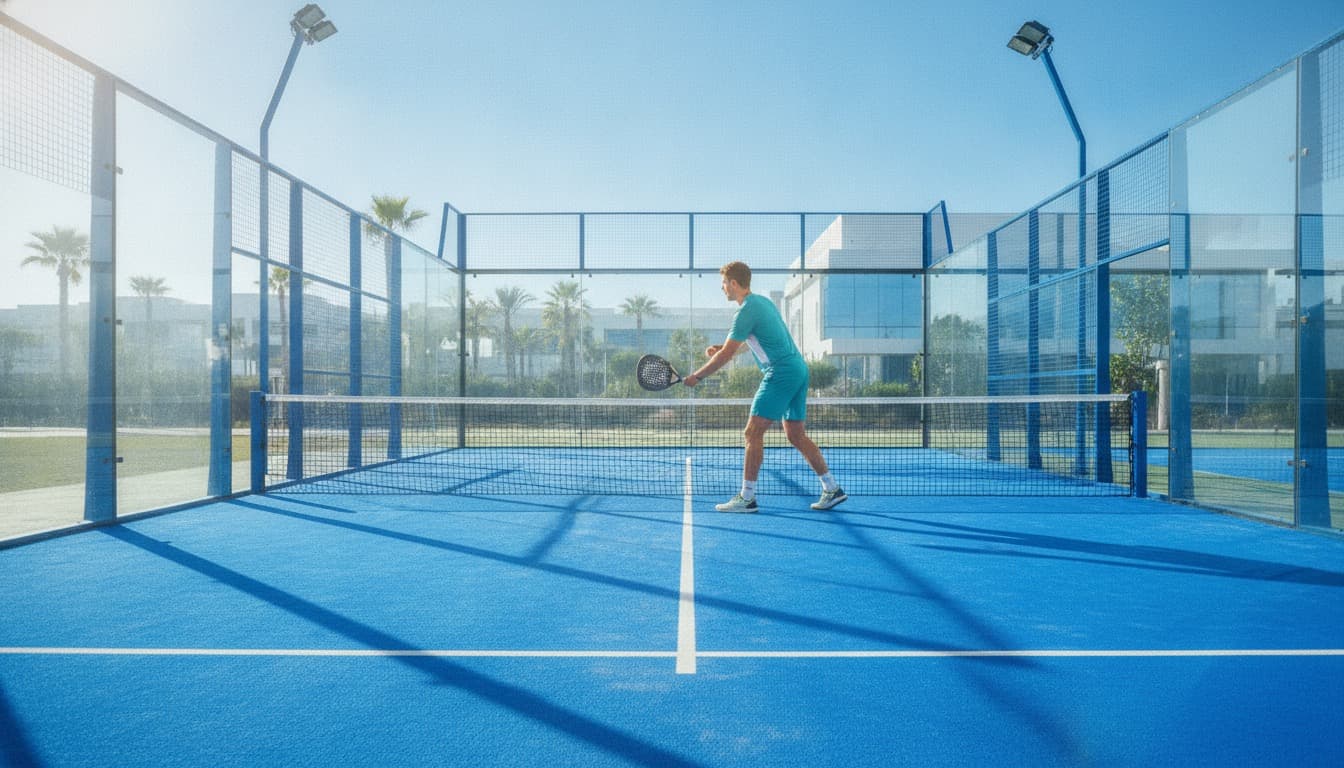
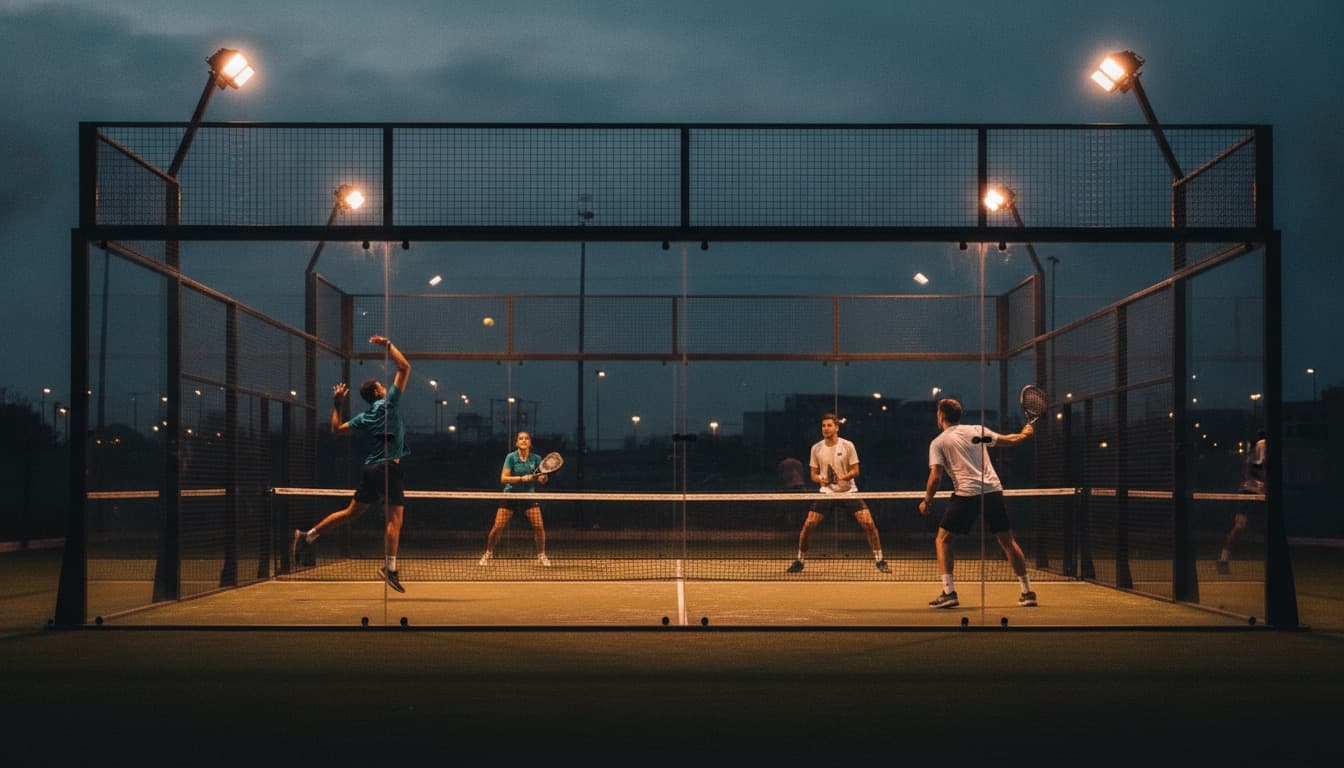
Padel is a doubles racket sport played on an enclosed 20x10m court, where you serve underarm and the surrounding glass and mesh walls keep the ball in play. It uses tennis-style scoring, a short stringless racket, and is one of the fastest sports in the world to pick up — most beginners hold a rally in their first session.
What is padel
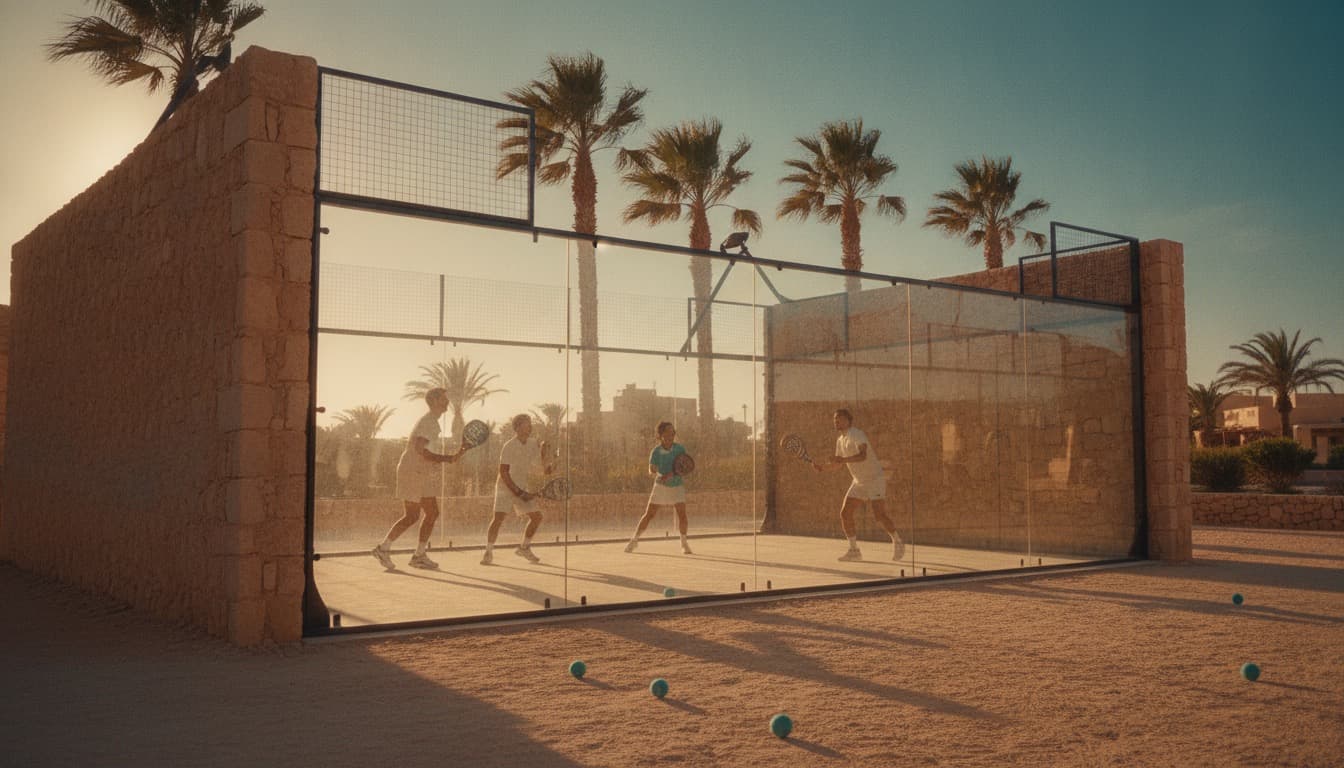
Padel was invented by Enrique Corcuera in Acapulco, Mexico, in 1969, and it sits between tennis and squash. You play two against two on a court a third the size of a tennis court, fenced in by glass and mesh. The two things that make padel its own sport: you serve underarm, and you can play the ball off the walls.
If you have ever played tennis, the scoring will feel familiar. If you have played squash, the walls will. If you have played neither, that is fine — the small court and the forgiving racket make it the easiest racket sport to start.
The object of the game
You and your partner share one side of the court. The aim is simple: make the ball bounce twice on your opponents' floor, or force them into an error. You lose the point if the ball bounces twice on your side, if you hit it out, or if it hits a wall before bouncing on the floor on the other side.
That last rule is the one beginners trip on. The ball must bounce on the floor first, then it can hit a wall. A shot that flies straight into the opponents' glass without bouncing is out.
Padel scoring
Padel uses tennis scoring exactly. Here is the full ladder.
| Term | Meaning |
|---|---|
| Point | 15, then 30, then 40, then game |
| Deuce | 40–40; you must win two points in a row to take the game |
| Game | First to 4 points (with a 2-point lead) wins the game |
| Set | First to 6 games (2-game lead); a tie-break is played at 6–6 |
| Match | Best of 3 sets |
The only quirk versus tennis is that some leagues play "golden point" — at deuce, a single sudden-death point decides the game instead of needing to win by two. Check before you start.
The serve
The serve is the most distinctive rule and the one that makes padel beginner friendly. You serve underarm:
- Stand behind the service line, bounce the ball once on the floor.
- Hit it at or below waist height — no overhead tennis-style serve.
- Send it diagonally, into the opposite service box.
You get two attempts, like tennis. Because the serve is gentle, the receiver almost always gets it back, so points are built through rallies rather than aces. That is why padel rallies last longer and feel more sociable than tennis.
Playing the walls
The walls are what hook people. When a ball passes you, do not give up on it — turn, let it bounce on the floor, watch it rebound off the back glass, and play it on the way out. A ball off the wall behaves predictably: it slows down and sits up, often giving you an easier shot than the original.
Two rules to remember:
- The ball may bounce once on the floor before it hits a wall. After that floor bounce, any number of wall contacts are fine until it touches the floor a second time.
- You can play the ball off your own back wall to return it, but it must clear the net and land in on the full — you cannot use the wall to send it back over.
Learning to wait for the rebound instead of swinging early is the single biggest jump a beginner makes.
Basic positioning and the golden rule
Padel is won at the net, but you do not start there. The pattern most pairs use:
- Serving team moves forward to the net after serving.
- Receiving team stays back until they earn the chance to come in.
- Move as a pair — both up or both back, never one of each.
The golden rule when you are under pressure: stay back and lob. Instead of trying to smash your way out of trouble, hit a high, deep lob over your opponents. It buys you time, pushes them off the net, and resets the point in your favour. New players who learn to lob beat stronger players who only hit hard.
Equipment to start
You need almost nothing:
- A racket (or "pala"). Short, solid, no strings, with holes through the face. Clubs rent these. Start with a round, soft head — it is the most forgiving.
- Padel balls. They look like tennis balls but with slightly less pressure.
- Court shoes. Clean trainers with grip are fine to start; padel-specific shoes help once you commit.
Most clubs rent rackets and sell balls, so your first session costs little more than the court fee. Find courts near you and book a slot.
Where to play and who with
Padel only works when the four players are reasonably matched — a lopsided game is no fun for anyone. The trouble is that "I'm a beginner" means very different things to different people, so guessing leads to mismatched games.
That is what PadiQ fixes. Take the level test and we place you on a 0–7 scale in about six minutes, then build balanced 2-v-2 games near you. If you want to understand that scale before you start, read padel levels explained. And when you are ready to get on court, here is how to find padel partners who actually match your game.
Get started
You now know the rules: doubles, underarm serve, tennis scoring, play the walls, stay back and lob. The fastest way to go from reading to playing is to get rated and matched. Take the free level test and PadiQ will line up your first balanced game.
Frequently asked
- What is padel?
- Padel is a doubles racket sport played on a 20x10m court enclosed by glass and mesh walls, which stay in play. It mixes tennis and squash: tennis-style scoring, an underarm serve, and walls you can play the ball off. It was invented in Acapulco, Mexico, in 1969.
- How do you play padel?
- You play padel two against two. The serve is underarm and bounces before you hit it. Rallies use tennis scoring, and the ball can rebound off the surrounding glass and mesh walls and stay live. You win points by making the ball bounce twice on the opponents' side.
- What are the basic padel rules?
- Serve underarm and diagonally after one bounce, below waist height. Score like tennis (15, 30, 40, game). The ball may bounce once on the floor before hitting a wall, and walls keep it in play. A point ends on a second floor bounce or an out-of-bounds shot.
- Is padel hard to learn?
- No. Padel is one of the easiest racket sports to start: the court is small, the racket is short with no strings to mishit, and rallies last longer than in tennis. Most beginners hold a rally in their first session. Wall play and the serve take a few games to click.
Play balanced padel
Find players at your exact level
PadiQ rates your padel level and builds balanced 2-v-2 matches near you. Get your level in a few minutes.
Get your level