Guide
Padel court: dimensions, cost, and how to build one
Padel court dimensions, wall and net heights, and honest cost ranges to build one — for players and clubs.
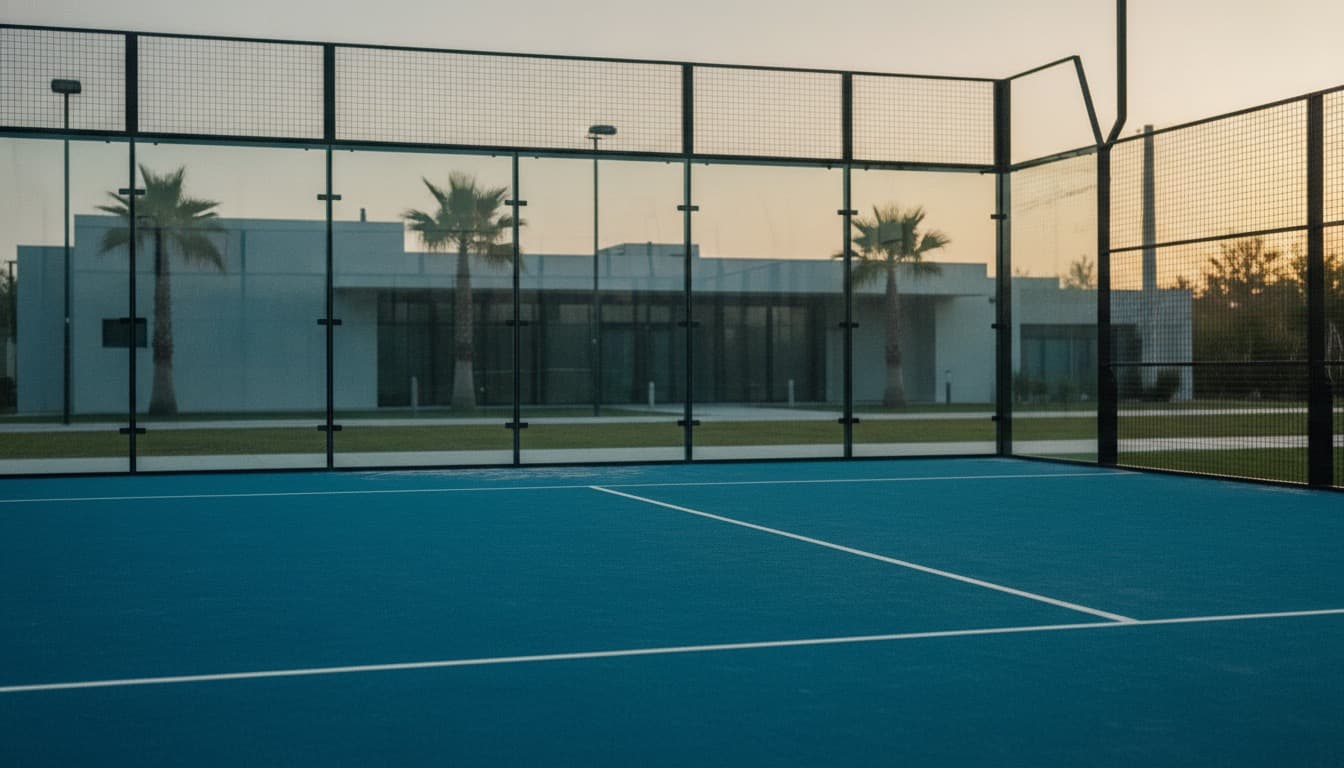
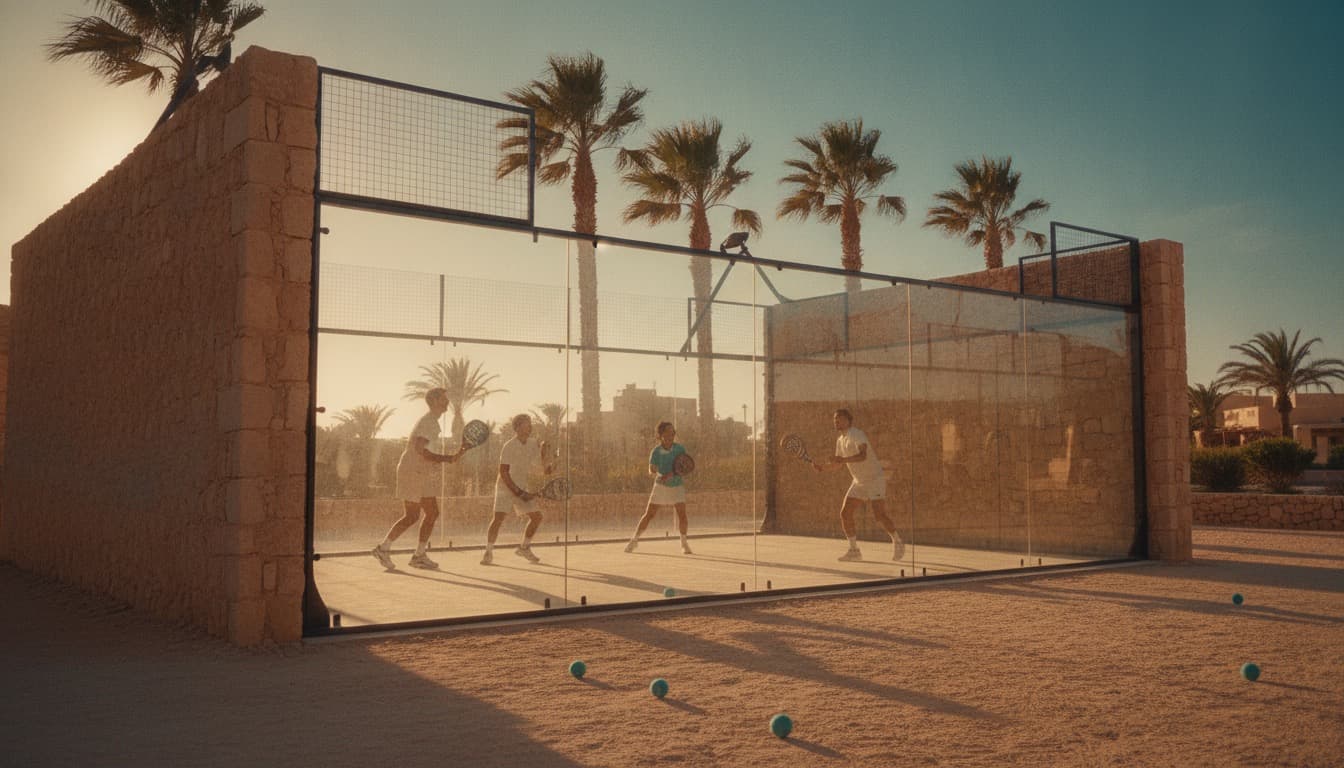
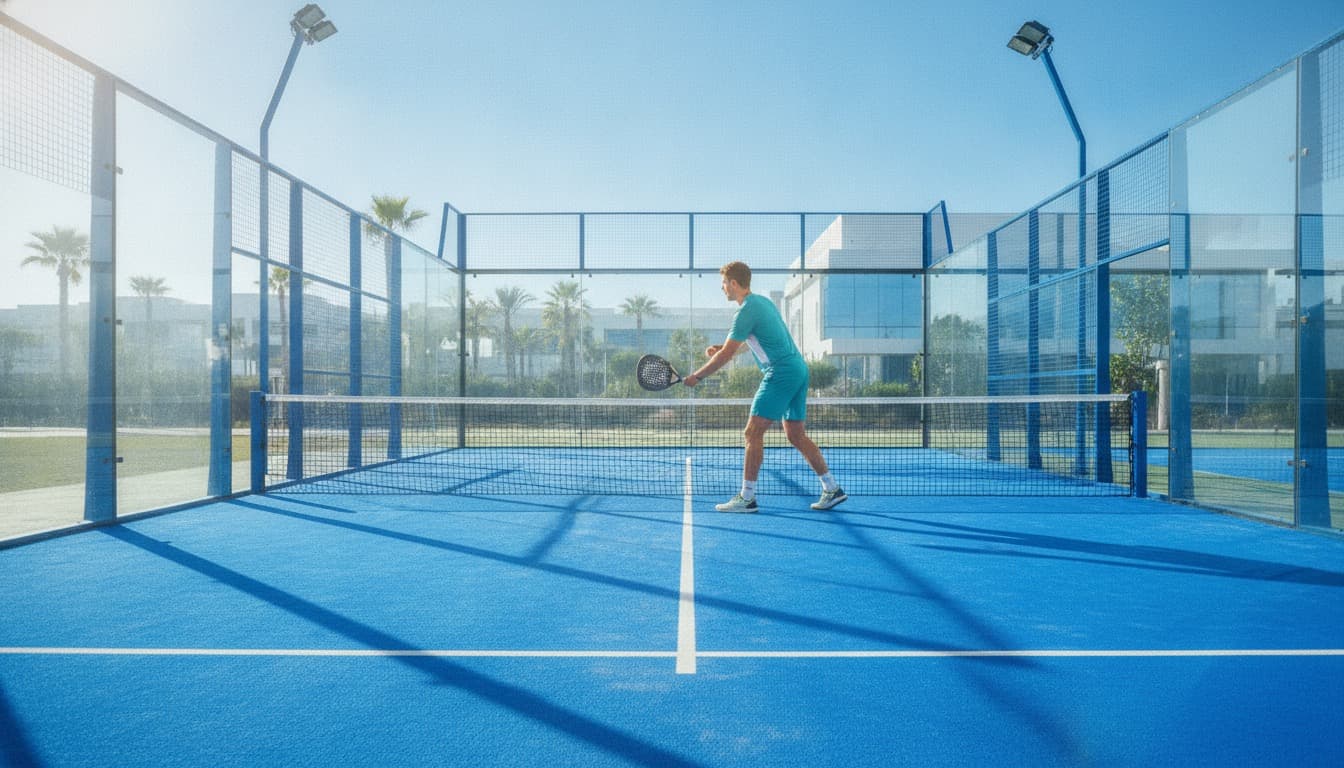
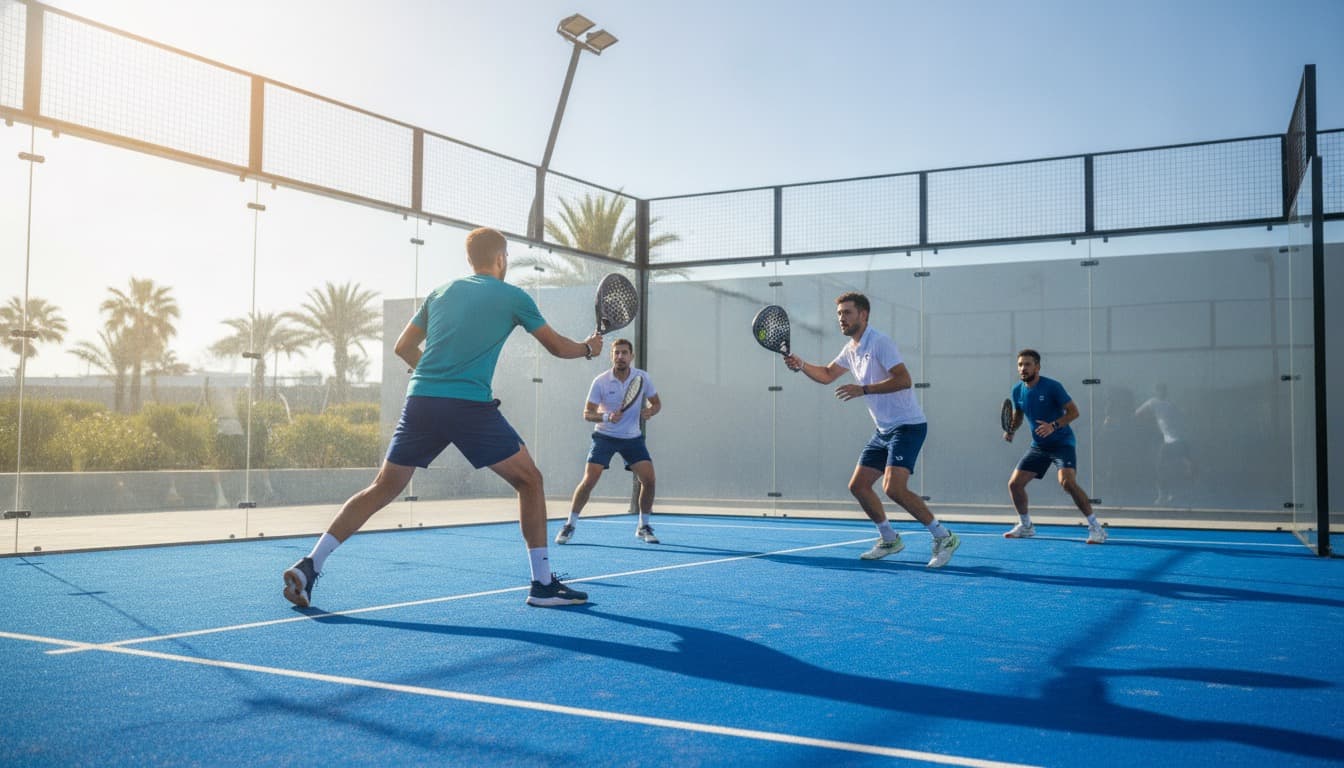
A standard padel court is 20 metres long and 10 metres wide (200m²), enclosed by glass and metal mesh, with a net 0.88m high at the centre and 0.92m at the posts. It is built for doubles, and the back and side walls are part of play — the ball can be played off them, like squash.
Padel court dimensions
The court is one rectangle, 20x10m, divided in half by the net. Each half holds a service area marked by a service line 6.95m from the net, leaving roughly 3m of space behind it to the back wall. There is a centre service line splitting each service zone into two boxes.
The enclosure is what makes padel different. The back walls and the lower sections of the side walls are solid (glass or concrete), topped by metal mesh. Players use these walls to keep the ball alive.
| Element | Measurement |
|---|---|
| Overall court | 20m long x 10m wide (200m²) |
| Net height (centre) | 0.88m |
| Net height (at posts) | 0.92m |
| Service line | 6.95m from the net |
| Service box width | 5m (half of court width, split by centre line) |
| Back wall — solid section | 3m high (typically 2m glass + 1m mesh) |
| Side wall — solid section | 3m high stepping down to 2m along the court |
| Mesh above walls | up to 4m total enclosure height |
| Minimum clearance height | 6m above the court (indoor) |
Two notes on accuracy. First, "panoramic" courts replace the corner metal posts with all-glass back walls for better visibility, but the playing dimensions stay identical. Second, wall and mesh configurations vary slightly by manufacturer and federation, but the 20x10m footprint and 0.88m net are fixed standards.
What a court is made of
A finished court is more than glass and turf. The build stack usually includes:
- Foundation — a level reinforced concrete slab, the single biggest cost driver and the one most likely to blow a budget if the ground needs work.
- Steel structure — galvanised posts and beams that hold the glass and mesh.
- Glass panels — 10mm or 12mm tempered safety glass for the walls.
- Artificial turf — sand-filled synthetic grass as the playing surface.
- Lighting — LED floodlights, essential for evening and indoor play.
- Optional roof or building — turns an outdoor court into an all-weather indoor one and changes the economics entirely.
How much does it cost to build a padel court?
Costs vary a lot, so treat any single number with suspicion. The honest answer: the price depends on country, labour rates, court type (standard vs. panoramic), and whether it is outdoor or indoor. Below is a rough framing, not a quote.
| Cost component | What drives it |
|---|---|
| Court kit (structure, glass, turf, net) | Standard vs. panoramic; manufacturer |
| Foundation / groundwork | Site condition, drainage, slope |
| Lighting | Number of fixtures, LED quality |
| Installation labour | Local rates, access to the site |
| Roof / indoor building | Adds the largest single jump in cost |
As a directional guide: a single outdoor standard court commonly lands in a low-to-mid five-figure range (kit plus install). A panoramic court costs more for the extra glass. Adding lighting, premium foundations, or an indoor structure pushes the total well beyond that — an indoor court inside a new building is a different project entirely. Get local quotes; anyone selling a fixed global price is guessing.
For clubs, the court is only the start. Resurfacing turf every few years, replacing lights, and cleaning glass are ongoing costs. The real question is utilisation: a court that sits empty is a liability, and a court that stays booked pays for itself. That depends less on the build and more on having a steady supply of players who can fill balanced games.
Padel court vs. tennis court
People assume padel is just small-court tennis. The dimensions tell a different story.
| Padel | Tennis (doubles) | |
|---|---|---|
| Court size | 20m x 10m | 23.77m x 10.97m |
| Enclosed walls | Yes (glass + mesh) | No |
| Format | Doubles only | Singles or doubles |
| Net height (centre) | 0.88m | 0.914m |
Padel was invented by Enrique Corcuera in Acapulco, Mexico, in 1969, when he walled in a small court at his home. The walls, the smaller size, and the underhand serve are why padel rewards positioning and patience over raw power — and why it is far easier to pick up than tennis.
Why court access shapes the game
Knowing the dimensions is step one. Actually playing is the harder part — you need a free court and three other players at a level close to yours. A perfectly built court is wasted on a mismatched game where one pair dominates every point.
That is the gap PadiQ closes. Find courts near you and we will help you fill them with balanced 2-v-2 matches instead of lopsided ones. If you are new to the sport, our 0–7 level guide explains how ratings work, and our partner-finding guide covers how to line up players who actually match your game.
Take the next step
Whether you run a club with a court to fill or you just want a good game this week, the bottleneck is rarely the court itself — it is matching the right four people. Get your padel level in about six minutes, then find players and courts near you. A balanced match on a standard 20x10m court is the whole point.
Frequently asked
- What are the dimensions of a padel court?
- A standard padel court is 20 metres long and 10 metres wide, enclosed by glass and mesh. The net stands 0.88m at the centre and 0.92m at the posts. It is split in half by the net, with service boxes measured from each back wall.
- How much does it cost to build a padel court?
- Costs vary widely by country, panoramic vs. standard, and indoor vs. outdoor. As a rough guide, a single outdoor court typically lands in a low-to-mid five-figure range; premium panoramic or indoor builds run higher once foundations, lighting, and a roof are added.
- What is the net height on a padel court?
- The net is 0.88 metres high at the centre and rises to 0.92 metres at the posts on each side. It spans the full 10-metre width of the court, dividing the playing area into two equal halves.
- How big is a padel court compared to a tennis court?
- A padel court is much smaller: 20x10m versus a tennis court's 23.77x10.97m singles-to-doubles footprint. Padel's enclosed walls and smaller size make rallies longer and reward placement over power.
Play balanced padel
Find players at your exact level
PadiQ rates your padel level and builds balanced 2-v-2 matches near you. Get your level in a few minutes.
Get your level