Beginner
What is padel? A complete guide to the sport
What is padel? A racket sport played in doubles on an enclosed glass court — here's how it works and why it's growing fast.
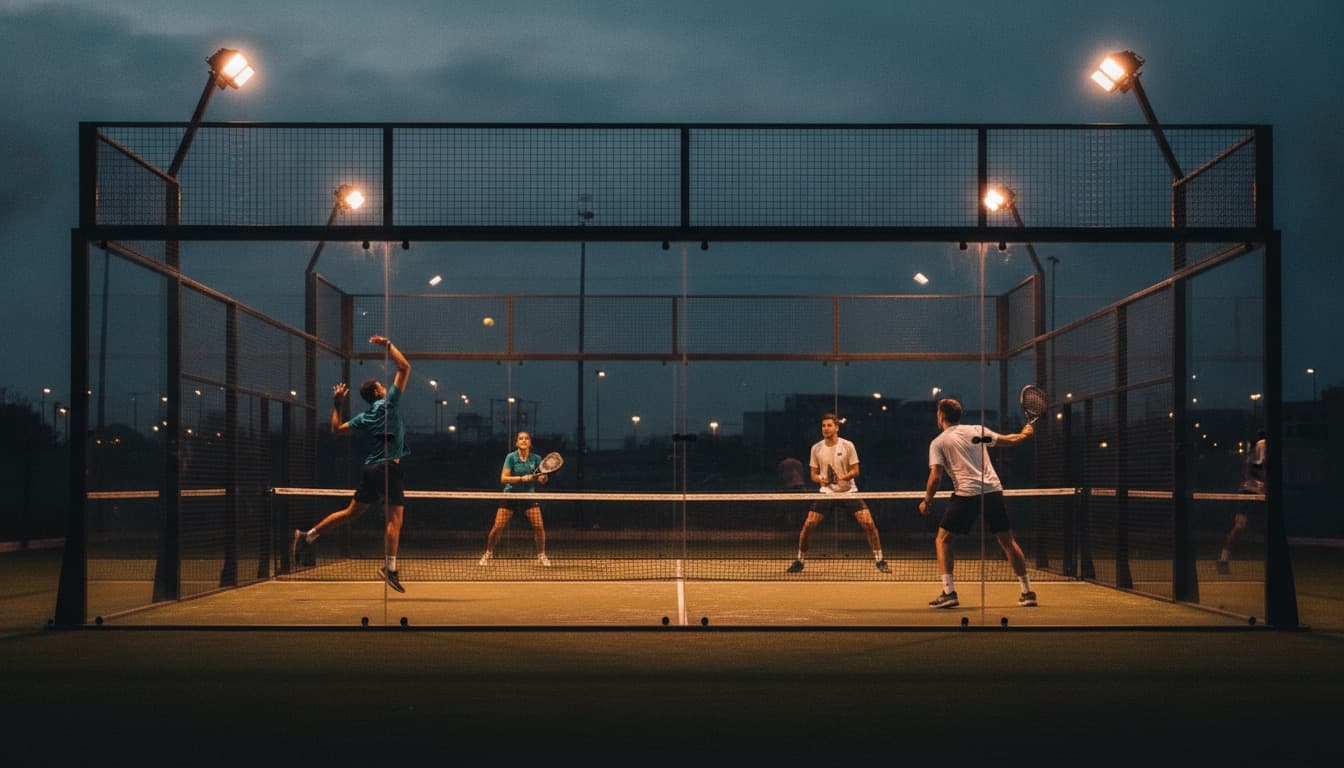
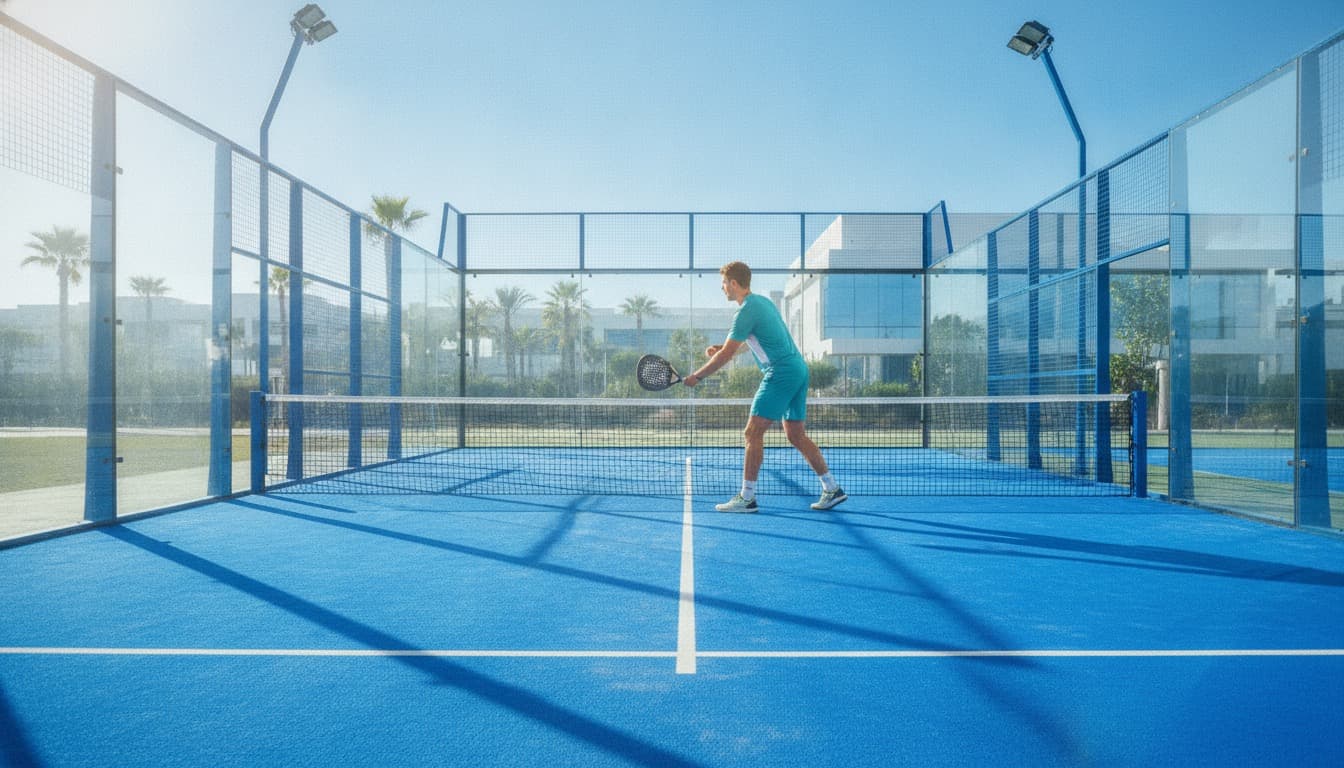
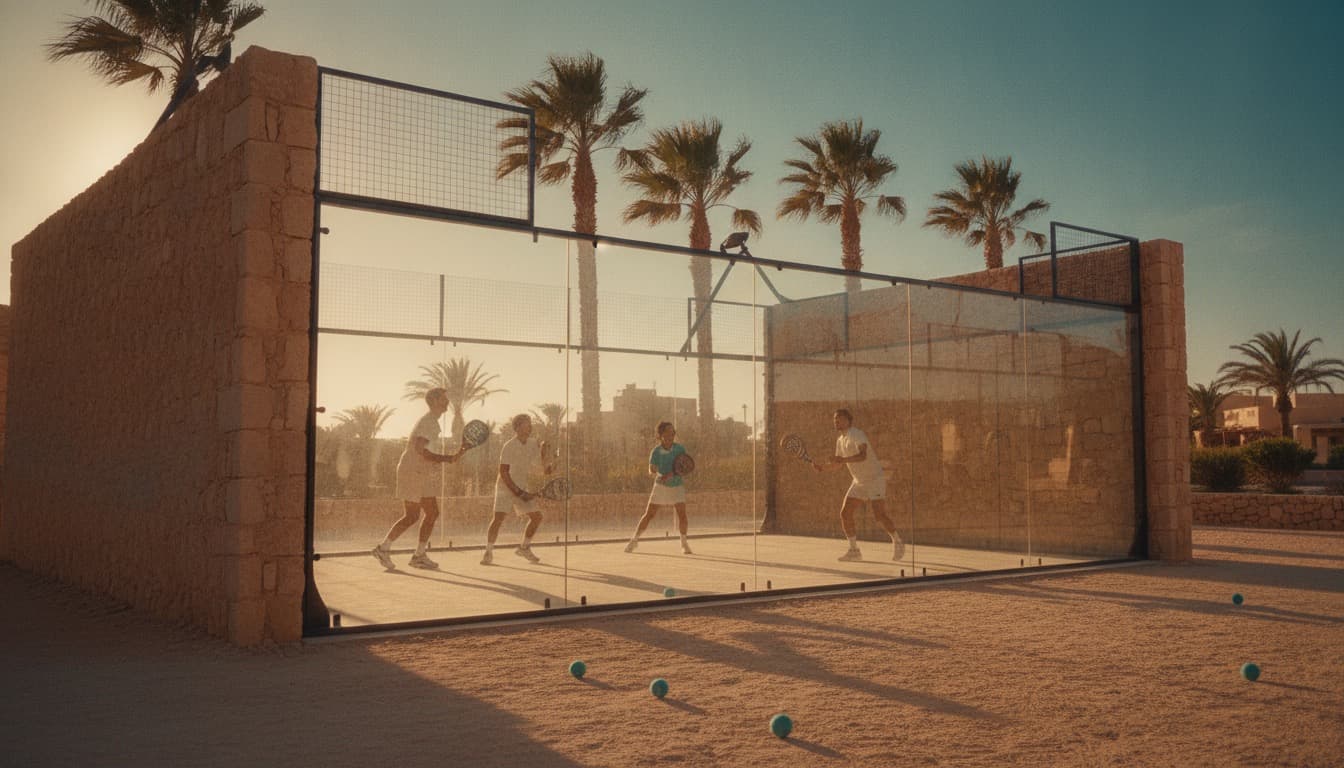
Padel is a racket sport played in doubles on an enclosed court roughly a quarter the size of a tennis court, where the surrounding glass and mesh walls stay in play like in squash. It uses tennis-style scoring, a solid stringless racket, and an underhand serve, which makes it fast to learn and easy to enjoy from the first session.
What padel actually is
Padel is always played two against two. You serve underhand, the ball can rebound off the back and side walls, and points are usually won through positioning and patience rather than raw power. The court's size and walls mean rallies last longer than in tennis, so even brand-new players keep the ball moving instead of chasing aces.
The sport was invented by Enrique Corcuera in Acapulco, Mexico, in 1969, when he enclosed a small court at his home with walls. It spread to Spain and Argentina in the 1970s, and those two countries remain the sport's heartland today.
Padel vs tennis: the quick comparison
People often call it "padel tennis," but it's a distinct sport. The scoring is borrowed from tennis, almost everything else is different.
| Feature | Padel | Tennis |
|---|---|---|
| Court size | 20m x 10m, enclosed | ~24m x 11m, open |
| Walls | In play (glass + mesh) | None |
| Racket | Solid, stringless, perforated | Strung frame |
| Serve | Underhand, below waist | Overhand |
| Format | Doubles only | Singles or doubles |
| Scoring | 15/30/40, games, sets | 15/30/40, games, sets |
| Learning curve | Gentle | Steep |
The walls are the biggest difference. In tennis a ball that passes you is gone. In padel it ricochets off the glass and the point continues, which rewards anticipation over reach and keeps beginners in the rally.
The court explained
A padel court is a sealed rectangle, 20 metres long and 10 metres wide, divided by a net at the centre. The back walls and parts of the side walls are tempered glass; the rest is metal mesh. Both surfaces are live: after the ball bounces once on the floor, you can let it come off the wall and play it back. There's no doubles alley and no singles court — padel is built for four players from the ground up.
This enclosure is why the game feels social and forgiving. You're never far from your partner, the points reset quickly, and a mistimed shot often gets a second life off the glass.
Why padel is growing so fast
Padel has become one of the fastest-growing sports in the world, especially across Europe and Latin America. A few reasons stand out:
- Low barrier to entry. The small court, underhand serve, and forgiving walls mean a first-timer can rally within minutes.
- It's social by design. Doubles only means you always play with three other people, so it doubles as a way to meet people.
- Quick to "get." You don't need years of lessons to have fun, which keeps people coming back.
- Space-efficient. Operators can fit several padel courts in the footprint of one tennis court, so clubs are opening everywhere.
If you're new and want to understand the on-court basics — serving, positioning, and using the walls — start with our guide on how padel works and how to play. Once you know the rules, the next step is simply finding courts near you.
Who padel is for
Almost anyone. Padel suits beginners because the learning curve is gentle, and it suits experienced players because the tactical ceiling is high — at advanced levels it's all about angles, lobs, and reading the rebound. It works for kids, older players, and competitive athletes alike, since power matters less than placement and teamwork.
The one thing that makes or breaks a casual game is balance. A 2-v-2 match is only fun when the four players are close in ability. Mismatched games turn into one-sided drills, which is why understanding your own level matters — see our breakdown of the 0–7 padel level scale to place yourself honestly.
Getting started
You need three things to play: a court, a racket, and three other people of roughly your level. The court and racket are easy. The players are the hard part, which is exactly what PadiQ solves.
Take the free level test and we'll place you on the 0–7 scale in about six minutes, then build balanced 2-v-2 matches with players near you who actually match your game. No more guessing whether a pickup game will be fun — show up to ones that already are.
Frequently asked
- What is a padel court?
- A padel court is a 20m by 10m enclosed rectangle, walled with glass and metal mesh that balls can bounce off, like in squash. A net splits it in two. It's about a quarter the size of a tennis court and is built for doubles.
- What is padel tennis?
- Padel tennis is just another name for padel. It borrows tennis scoring and the doubles format, but it's a separate sport with solid stringless rackets, an enclosed glass court, and walls that stay in play. Most people simply call it padel.
- How do you pronounce padel?
- Padel is pronounced PAH-del, with a short 'a' as in 'father'. It's not 'paddle' and not 'pay-del'. The word comes from the Spanish pádel, which is where the sport took off, so the Spanish vowel sound is the right one.
- Is padel easy to learn?
- Yes. Padel is one of the easiest racket sports to start. The court is small, the underhand serve is simple, and the walls keep the ball in play, so beginners rally on day one. Reaching a competitive level still takes practice and good positioning.
Play balanced padel
Find players at your exact level
PadiQ rates your padel level and builds balanced 2-v-2 matches near you. Get your level in a few minutes.
Get your level